Saturday, April 20, 2013

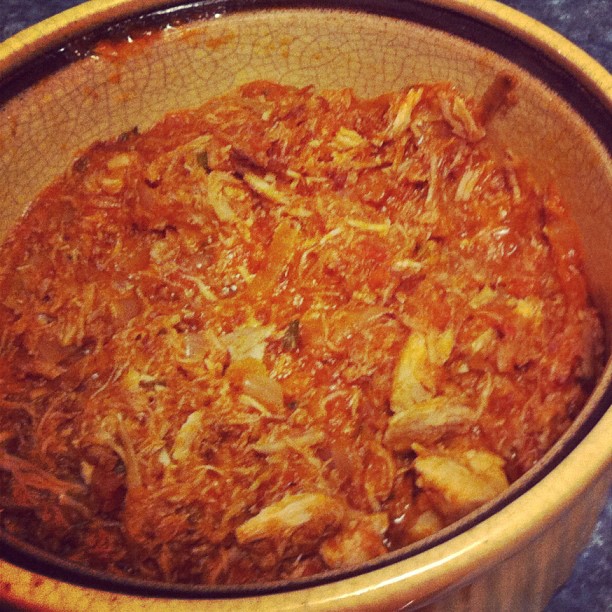
Super-Quick Pasta with Tomato Onion Sauce and Leftover Chicken


This dish is so simple I almost wasn't going to post it. But perhaps you, too, find yourself with a bit of leftover cooked chicken on hand and are looking for a little inspiration. The combination of onions, tomato and chicken, with some feta and olives tossed in, came out very nicely. You might want to duplicate this or make up you own version.

I started by chopping one sweet onion and sauteeing it in some olive oil until it started to caramelize, about 10 minutes. Added two cloves garlic, minced, and sauteed for another minute. Then in goes a 14.5 oz. can of diced tomatoes and a tsp of dried oregano, simmered on medium heat. I started cooking the small pasta shells at the same time I started cooking the tomatoes. After the tomatoes simmered for about 10 minutes, I added the leftover chicken breast along with a handful of sliced kalamata olives. I had about 8 ozs or so, cut into bite sized pieces. I just wanted the chicken to get heated up but not really cook any more.

Once the pasta was cooked and drained, it gets tossed with the tomato/chicken sauce, along with a 1/2 cup or so of feta cheese. Then you've got a quick, tasty meal ready to enjoy!

Saturday, April 6, 2013

Ile de France Brie with a Côtes du Roussillon Red Wine


I'm always up for some wine and food pairing fun! So when the folks at Ile de France Cheese ask me on Twitter if I'd like to try to come up with a wine pairing for one of their cheeses, I readily accepted. There were a couple bottles of French wine I had on hand that I thought I might try, which I had in mind when selected the cheese. We've always been brie fans here, so I opted for that over the goat cheese and blue cheese that were available at the grocery store.

Chardonnay was the first idea that came to mind for pairing with brie, and that was one of the more frequently mentioned suggestions in my quick online research. I was more in the mood for red wine, however, and lighter wines with acidity like Pinot Noir were often recommended. Enough with the web research, I was ready to open up the cheese and some wine and try for myself!

First, I opened a Beaujolais, which I'd also come across on the web as a suggested pairing. It has a similar body and acidity like Pinot, making if food friendly. Should work great with the brie, right? Well, this wine was very austere, and that acidity seemed to clash with the creaminess of the brie. I tried decanting the Beaujolais. It opened up a bit, I like the wine better, with some blackberry fruit showing, but alas, not a winner for this brie.

Then I found a winning pairing for the Ile de France Brie. The 2009 Domaine Gauby Les Calcinaires Côtes du Roussillon Villages had nice plummy fruit and a touch of spice. But what really made it work in my estimation was the silky smooth mouthfeel with a long finish. That silky mouthfeel matched very nicely the creaminess of the cheese, so going between bites of cheese and sips of wine was a continuous, pleasurable experience.

This Côtes du Roussillon is a blend of Syrah (50%), Mourvedre, Grenache Noir, and Carignan. The bottle goes for an average price of about $25. I suspect you'd do well pairing this Brie with other reds from Roussillon with a similar blend, and you might also enjoy it with a Côtes du Rhone with Syrah and Grenache.

This experiment is a good reminder that with wine and food pairings, you've got to let your own taste decide. On paper (or the web), the Beaujolais should have worked according to the expert commentary. But I branched out, tried something that I thought might work, and found a very nice pairing! Be willing to try different combinations, and pay attention to how the two work together for YOU, and you'll be well on your way to discovering great pairings for yourself.

Saturday, March 23, 2013

Anna's Dolcetto with Pasta and Abruzzi-Style Lamb Sauce


Last Friday evening I was finding so many great recipes browsing through the current Food & Wine anniversary edition. Then I remembered Pairings Wine & Food was planning to have Anna Maria Abbona, a winemaker from Italy's Piemonte region, pouring samples on Saturday. That helped me narrow down my food plans. I decided on making the Pasta with Abruzzi-style Lamb Sauce, figuring I'd likely sample a wine that would work well with it.

As suspected, there Anna was pouring a great lineup of six wines when I arrived at Pairings. We started by tasting their entry level Langhe Dolcetto, from young vines Anna planted herself. She shared her grandfather's wisdom that "You don't plant a vineyard for yourself. It's for your grandchildren." Well, I liked the way this first Dolcetto was drinking right now as a nice everyday, food-friendly bottle. The next two in the lineup seemed to have potential to pair with our meal. There was a Barbera was good, but I simply liked the fruit forward Dolcetto Di Dogliani Doc "Sori Dij But", a bit better and chose that for our pairing. The tasting also included a well-structured Nebbiolo, and a Dolcetto from the vineyard that Anna's grandfather planted for her--the Dogliani DOCG "Maioli". This provided a nice example of the quality of older vines, creating a more austere and complex wine.

So I left Pairings with some food-friendly Italian wine, ready to make the meal I chose with the wine in mind. You can pop over to the Food & Wine site for all the Abruzzi-Style Lamb Sauce recipe details, but I'll give the visual highlights of the simple recipe below. After sauteeing some onions, you add pancetta and chopped rosemary and start getting some great smells!

Then brown the finely diced lamb shoulder (1 good size lamb arm chop gave me the amount of meat I needed).

After the lamb is browned, some wine gets added, followed by a 28 oz can of diced tomatoes.

For a good measure, I put the bone in to simmer for awhile, getting some extra flavor from the fat and meat I had managed to cut off. After the tomatoes simmer for about 20 minutes, you stir in the pasta and a nice portion of cheese. The recipes calls for pecorino, but I had some great Parmigiano Reggiano on hand that I used instead, with good results.


I served the pasta with a green salad and extra cheese at the table. This was a very flavorful sauce despite a relatively short cooking time. I can see why it made the Food & Wine favorites list! As anticipated Anna's Dolcetto enhanced the flavors of the meal chose anticipating her visit, a nice balance of fruit and acidity. I enjoyed the wine on its own when I sampled it, but it really shines with the right food, as is so often the case with good Italian wine! Not the first time I've picked a recipe based on the wine I wanted to serve, and it won't be the last.
Note: I wasn't originally planning to blog about this so limited photos from the winemaker visit and I don't have the vintage years in. Will try to update with that info.

Saturday, March 2, 2013

Almost Spring Risotto with Parmigiano Reggiano


Hungrily wandering the narrow streets of Florence, I spied a simply adorned trattoria packed with locals clearly enjoying their meal. Looked like a promising spot for dinner. Upon entering, gestures from the hostess told me to take the one empty seat at a long table filled with wizened Italian men whose faces suggested many years of working in the Tuscan sun. No sooner did I get a few friendly nods and Buona seras, I had a hearty plate of meat lasagna plopped in front of me. This clearly wasn't a menu oriented place, you ate what they cooked and you liked it.  The primi piatti was served along with my personal bottle of Chianti complete with the straw basket. And of course, the gentleman to my left passed the bowl of freshly grated Parmigiano Reggiano, which I eagerly heaped onto my lasagna. This was clearly a very different cheese than the powdered stuff in the green dispenser I'd grown up with! Somewhere into the meat course, during another passing of the Parmigiano, one of my dining companions and I realized we both spoke a similar amount French (un peu), and struck up a conversation.

found great fettuccine while exploring the canals!
After completing my whirlwind post-college European tour, I began learning to create my own meals, many of them hearty Italian pasta dishes. A few years into my cooking journey, Jodi and I began planning to honeymoon in Italy. I eagerly awaited more memorable meals in Florence, hoping to inspire my own cooking to a higher level. I was curious to sample fresh Italian pesto, one thing I'd mastered in my own kitchen. But when we arrived, I was disappointed not to see pesto mentioned on the short list of options scrawled on chalkboards in the restaurants we visited. I found other things to enjoy, but was a bit perplexed by the absence of what I thought was an Italian staple.

Finally, I met a server who spoke just enough English to respond to my quest for pesto. She shrugged, and said emphatically, "The basil ees not FRESH!". But another dish captured my attention. Fettuccine Alfredo at a restaurant in Venice featured perfectly cooked, homemade fettuccine noodles coated in a luxurious cream, with a nutty taste and just a hint of sweetness. Perfection on a plate--and my curiosity was piqued. Why was this dish different than the version I'd prepared back home? I eventually discovered that classic Italian Alfredo doesn't use the cream I did. Only three ingredients are involved: homemade noodles, plenty of butter and a generous 1/2 pound or so of top quality Parmigiano Reggiano.

Coming to understand why the Italians wouldn't serve pesto in early March and how three ingredients could make a great dish marked an important stage in my development as a cook. Focus on what's fresh, and let a few great ingredients like great Parmigiano Reggiano shine. These lessons have served me well.
plenty of Parmigiano @ Whole Foods!
When I heard that Whole Foods was looking for bloggers to share recipes that celebrate Parmigiano Reggiano, as they seek to shatter the world record for Parmigiano cracking, I tried to keep in mind the lessons I'd learned in Italy. I wanted to be sure my dish put the cheese was central to the dish, to let it shine. I also wanted my creation to be in keeping with the rhythm of the seasons.

Patches of green are starting to emerge as the snow melts. We have a ways to go before spring is in full bloom here in the Boston area, but I did notice some good looking asparagus had arrived at Whole Foods from a warmer climate. So I grabbed that asparagus along with snap peas, another early spring vegetable, to use in a risotto that would showcase the big chunk of Parmigiano Reggiano, and have us anticipate the spring weather soon to come. I was quite pleased with the resulting Almost Spring Risotto, and I hope you will be too! As an added bonus, this fancy tasting dish is vegetarian.

basil emulsion
1 cup basil
2 garlic
1/4 cup extra virgin olive oil

risotto
2 tbsp extra virgin olive oil, divided
1 1/2 cup sweet onions, chopped (Vidalia would fit the theme nicely)
1 cup dry white wine
2 cups arborio rice
7 cups vegetable broth
1 bunch asparagus, rough ends trimmed, the remainder cut into pieces of about 2 inches
2 cups snap peas, ends trimmed, pods cut in half
3/4 cup freshly grated Mitica Parmigiano Reggiano, plus extra to pass at table (or other high quality parm cheese)
1 tbsp lemon juice
salt and pepper to taste

Get started by taking your block of Parmigiano Reggiano and grating it. Go ahead and grate at least 1 cup or more so you have plenty to pass at the table. Be sure to nibble on a few pieces as you go to appreciate its rich nuttiness. Top quality Parmigiano from Whole Foods tastes great on its own as well as being a star ingredient in many recipes.

Next step is to make the basil emulsion. This is a bit like a pesto, without the pine nuts or cheese. This component adds a nice fresh flavor to the dish. Simply rinse and dry the 2 cups of basil leaves, and add them to a food processor along with the garlic. Puree the two ingredients together, then gradually pour the olive oil in with the motor running. Set the emulsion aside for finishing the risotto.

Now, it's time to get going on the risotto making. Bring the broth to a gentle boil and lower a bit to keep it warm, on burner handy to where you'll be cooking the risotto. Heat 1 tbsp of the olive oil in sturdy pot for making the risotto. Add the onion, saute on medium heat until they soften, about 5 minutes. Pour in the rice, and stir to get it all well coated with the onions and oil. Cook for about one minute, then stir in the wine. Stir frequently, and cook until the wine is pretty well absorbed.

Once the wine is absorbed, it's time to begin gradually adding the stock to to pot. Add one cup, stir frequently. I keep it around medium heat, but go a bit higher if things seem to be going very slow, then lower the heat if it starts boiling. When the first cup of broth is absorbed, add another. This process continues until the stock is used or mostly used, and the rice is getting tender. You need to be stirring frequently...it's OK to briefly leave the pot to do other kitchen tasks, including steaming the vegetables, but stay nearby as it needs to get stirred every minute or two. Many recipes say this takes 15 to 20 minutes, but I usually find it takes more like 40...and my risotto always tastes great!

Steam the vegetables while you are keeping an eye on the risotto, stirring frequently. The steaming time will vary based on the thickness of the asparagus. I had thicker stocks so steamed them for about 5 minutes. Add the peas for the final minute or two of steaming, they take very little time. You want the vegetables to be tender but still crisp. When they are done, drain and rinse with cold water to keep them from cooking more.


After about 40 minutes and all the liquid has been stirred into the risotto, test the risotto, it should be tender but still a bit firm, similar to al dente pasta. You can stir in a half cup of water if you need to soften it a bit more. When the rice is ready, turn the heat down to medium low, and stir in Parmigiano Reggiano and a tablespoon of olive oil. Once the cheese is incorporated, stir in the veggies and basil emulsion. Cook on low for a minute or two so the cheese melts and the flavors are incorporated. Add a generous grind or two of pepper and stir in the lemon juice. Add a bit of salt to taste if you desire, but with the cheese you don't need much if any.


Now, you are ready to serve and enjoy the risotto. Encourage each person to sprinkle a generous amount of the Parmigiano Reggiano on top of their serving. This goes well with a green salad. Keeping with the Italian theme, I paired it with an Italian white Moscato from Manincor, a great producer from the Alto Adige region.

Help us bring the big cheese to Woburn! If you've been to a Whole Foods, you know their cheese is pretty awesome. There's a Twitter contest to bring the genius behind that cheese, Whole Foods Global Cheese Buyer Cathy Strange, to our local Whole Foods. Help us win by RTing @wfm_woburn's tweets that include #parmcrack and @wfmcheese in them! (You can find those in my @cookingchat feed too!).

Full disclosure: This post was written for a contest to write a story of our interest in Parmigiano Reggiano along with a recipe featuring the cheese. I received a gift card to buy my cheese, the recipe and story are my own!


Sunday, February 24, 2013

Open That Bottle Night #OTBN Food and Wine Highlights


Saving a great bottle of wine for that special occasion that still hasn't rolled around? Well, Open That Bottle Night (OTBN) can be that occasion! Always the fourth Saturday of February, I've enjoyed observing this tradition for several years now. This time, the rest of my family was out of town for the weekend, so organizing an OTBN gathering seemed like a fun way to keep myself busy in their absence.

As you can see, my friends and I assembled and sampled quite a lineup of wines! But of course, any time we start talking about enjoying wine, food needs to be in the conversation. My preparation for the day started on Friday, getting the beef marinading for stew the next day.
My friend John had a conflict on the official OTBN, so he offered to stop by with some OTBN worthy wines on Friday as I was getting things ready for the next day.

The 2009 Charles Krug Reserve Cabernet and the 2006 Chateau Pontet-Fumet made for a great start to the wine-focused weekend! The incredible silky mouthfeel of the Krug sticks with me 2 days and quite a few bottles later. John also brought some serious steaks over to go with the serious wine...
Friday was a great start to the weekend of wine and food fun. Saturday I got busy early browning the beef and getting the stew going.
Then it was time for the guests to arrive...armed with great food and wine! For starters, we enjoyed this pork tinga, a very tasty Mexican pork dish served homemade chips.

And an onion and jalapeno pizza with some nice kick!

It wasn't a true OTBN wine, but when I tasted the 2010 Mas Cristine Blanc Roussillon blend earlier that day at Pairings, I correctly thought it would work with some spicy apps. That was followed by a 2011 Maison Louis Latour Poiully-Fuissé, another tasty white that worked well with the pate and cheeses. I also made some Muhammarra (spicy red pepper dip) for the early nibbles. Then it was on to some salad--needed to get some greens with all the rich foods!

My aim was to use the walnuts and parm cheese in the salad to help it stand up to the reds I correctly suspected we'd be into at that point of the evening. One of my favorites of the evening was opened around this time...
I'm partial to wines that come with a story. New friends Deshea and George talked of their visit to Sonoma, and their trials and tribulations getting some of their wine discoveries shipped home. Fortunately they managed to get this 2006 Hartford Sonoma Coast Syrah out of California, as it was a great wine. They'd held it in their cellar for a few years, and I'd say it had reached optimal drinking state. Nice berry fruit and a long finish. Yum! Such big wines whet our appetites for some beef!
If memory serves, the Syrah was followed by a big Napa wine, the 2010 Uppercut Cabernet Sauvignon. My friend Praveen had first tried this at Capital Grille, and correctly thought this would be a great contribution to the evening. It's a big, tannic cab that definitely stood up to the beef. This was the only one we decanted, as it's clearly a young wine that could be put down for several years. We still had room for one more big red after the Uppercut...

The 2009 Echo de Lynch Bages is a cab dominated Bordeaux. This was my official OTBN bottle. I'd received it for Christmas, and had heard good things about it...so was waiting for just the right meal to have it with. I picked the beef stew for the night with this wine in mind! Wines put off can sometimes build up expectations unrealistically high, but this one did not disappoint. Definitely give this a try if you get a chance!

There was one more OTBN contribution to go with dessert.

The 2004 Iron Horse Sparkling Wine from the Russian River Valley stood up nicely to a bit of aging. Clean, crisp and just a touch of sweetness, a perfect finish to the evening!

Wednesday, February 20, 2013

Indian Food Paired with Bulgarian Wine


Indian food paired with Bulgarian wine, everyone's go to combination, right? Well, seeing as my post on Pairing Wine with Indian Food written way back in 2006 is still consistently one of my most viewed posts, I know there's a a lot of interest in the subject. So when I'm enjoying Indian food, I am also on the lookout for good wines to go with it. In the process, I've even found a red wine I enjoyed with Indian fare. But this time, it was back to white.

This pairing started with the wine. Earlier this year, Pairings Wine and Food has a tasting focusing on "interesting" wines that exposed us to new regions and countries, including wines from Georgia and the Ukraine. But it was the Bulgarian Targovishte Muscat Ottonel that piqued my interest the. At the tasting, I noted this wine worked well with pineapple chipotle salsa, so I thought I'd get a bottle to try with some Indian cuisine.

Last week we had a chance to test out the pairing. Our family, led by our 7 year old who loves mango juice and "Indian bread", headed for the Ambassador Indian restaurant in Woburn, which allows you to bring your own wine. We ordered a chicken curry and aloo palak (potatoes in a creamy spinach sauce). The Muscat Ottonel featured pear fruit, and a bit of minerality in the backdrop. I'd describe it as medium bodied, a nice balance for the food. Though it is labeled as a "dry" white, I tasted a bit of sweetness that was refreshing with the spices in the food.

I didn't know much about Bulgarian wine or Muscat Ottonel before trying this. Apparently this grape is one of many varieties of Muscat, often used in dessert wines in countries such as Austria. This dry verson comes from the Targovishte winery located in Bulgarian's Black Sea region. And most importantly for this blogger, it pairs well with Indian food!

Friday, February 8, 2013

Sauvignon Blanc Pairing: Pasta with Chicken, Goat Cheese and Peppers

I eagerly broke open the package from SIP Certified on Monday, and found my pairing challenge awaiting me. I'd received a bottle of 2011 Castoro Cellars Sauvignon Blanc, and my goal was to come up with a good dish to serve with it...and to be ready to tweet about it for this past Wednesday's #WineChat. Pesto is the food I enjoy most often with Sauv Blanc, but we'd just finished a batch of that favorite. So I did a little research to get ideas for good pairings, and found this helpful article. White meat or fish, and leafy green herbs were highlighted as good matches for the crisp edge of this grape. I would up combining many of the suggested ingredients for this tasty Orechiette with Chicken, Peppers & Goat Cheese. We were pleased with the results!

Now, before the recipe details, a bit of context on SIP Certified. This week's #WineChat gave us a chance to learn about the comprehensive standards for sustainability that SIP, (short for "Sustainability in Practice") promotes. We chatted about how the healthy vineyards produced through these practices leads to great fruit...and of course, that is much of what makes great wine. Dozens of California wineries are SIP Certified, and the folks tweeting their tasting notes during WineChat were clearly pleased with the wines coming out of these vineyards. So, if you're looking for a quality wine you can feel good about enjoying, give one with the SIP certification a try! Now, on to that recipe...

1 spring onion, white and light green portion w a bit of the darker green, chopped *see note
1 red bell pepper
1 or 2 garlic cloves, minced
2 tbsp. fresh basil, julienned
2 tbsp fresh squeezed lemon juice
1 heaping tsp capers
2 tbsp white wine
3 ozs goat cheese
2 chicken breast fillets,  (a bit under a pound) sliced crosswise to create strips of 1/2 inch thick
3 tbsp olive oil
12 ozs orechiette or other short pasta shape

Heat 1 tbsp olive oil in a large skillet on medium heat. Add the onions, saute until it begins to soften, then add the red bell pepper. Cook another 5 minutes so the pepper begins to soften.  Add the garlic, cook for another minute. Push the vegetables to the edge of the pan, then add another tbsp olive oil to the center of the pan. Add the chicken to the center, cook until the outside is mostly white. Add the wine and 1 tbsp basil, stir to combine the chicken with the veggies, and cover the pan. Cook until the chicken is cooked through, about 5 minutes, stir occasionally.


Meanwhile, start a pot of water to boil for the pasta as you begin cooking the veggies. Add the pasta around the same time you add the chicken to the pan. Cook al dente according to package instructions. Reserve 1/4 cup of the cooking water. Drain the pasta, and stir in the chicken and veggie mixture, along with the cheese, lemon juice, capers and remaining basil and 1 tbsp olive oil. Add a bit of the cooking water to help the cheese and veggies meld together, if needed.

Wine Pairing: The 2011 Castoro Cellars Sauvignon Blanc has a light straw color. I got a bit of hibiscus on the nose, and the taste is fresh and lively. I detected kiwi, lemon and a touch of pepper. This picked up the lemon, herbs and onion in the dish nicely. I'd say we got this pairing done right, if I do say so myself! According to the Castoro website, this is their first year producing Sauv Blanc, and I'd say the did quite well.   There's a bit of Gewurztraminer blended in, which gave I'd say gave it just a touch of spice. A good value at around $15.

Note: Spring onions are young sweet onions available toward the latter part of winter and into the spring. I like to use them during the season as a reminder that winter is on the wane. You can use the small bulb as well as the green that grows out of it. But if those aren't available, substitute Vidalia or other sweet onion.

Full disclosure: I received a complimentary bottle of the wine from SIP to sample. The opinions and recipes here are entirely my own!